How Ivermectin Works and When to Use It Safely
Ivermectin is a widely used antiparasitic medication effective against various worms and insects. Understanding its mechanism, approved uses, and safety guidelines ensures proper application.
Mechanism of Action
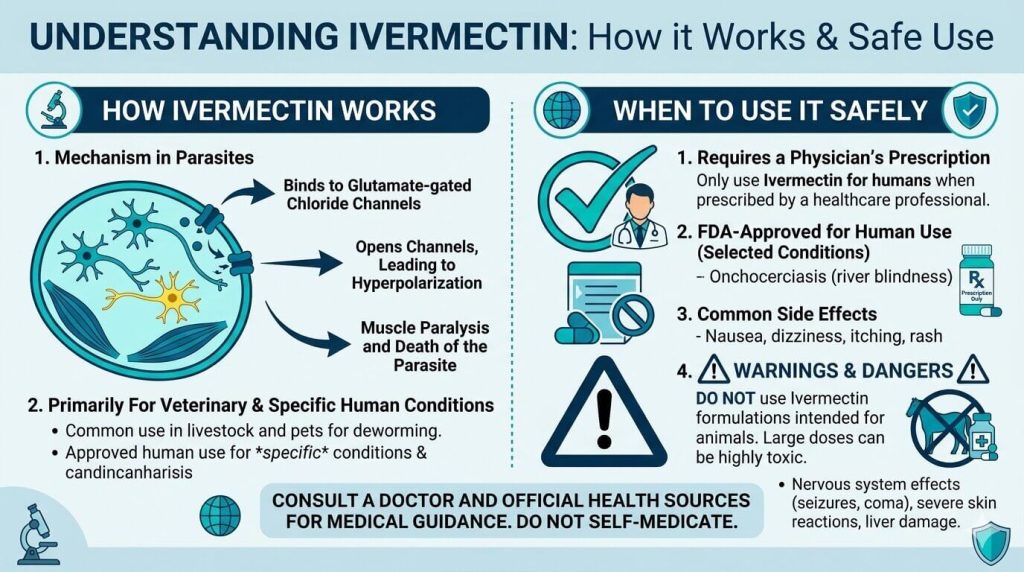
Ivermectin binds to glutamate-gated chloride channels in invertebrate nerve and muscle cells. This binding increases chloride ion permeability, causing cell hyperpolarization, which paralyzes and kills the parasite. In mammals, it spares most cells because these channels are absent outside the central nervous system, and the drug rarely crosses the blood-brain barrier at therapeutic doses.
It also interacts with GABA receptors in parasites, further disrupting neurotransmission. Absorption peaks around 4 hours post-dose, with broad tissue distribution.
Approved Uses in Humans
The FDA approves oral ivermectin for strongyloidiasis (intestinal infection from contaminated soil) and onchocerciasis (river blindness from blackfly bites). Topical forms treat head lice and rosacea.
For strongyloidiasis, it eliminates gut parasites causing abdominal pain, diarrhea, or rashes, often asymptomatically. In onchocerciasis, it kills microfilariae, reducing itching, skin nodules, and vision loss, though adult worms persist, requiring repeated dosing.
Veterinary uses include heartworm prevention, but human formulations differ.
Dosage Guidelines
-

Ivercor 12 Mg (Ivermectine)
Just $0.73 /Piece -
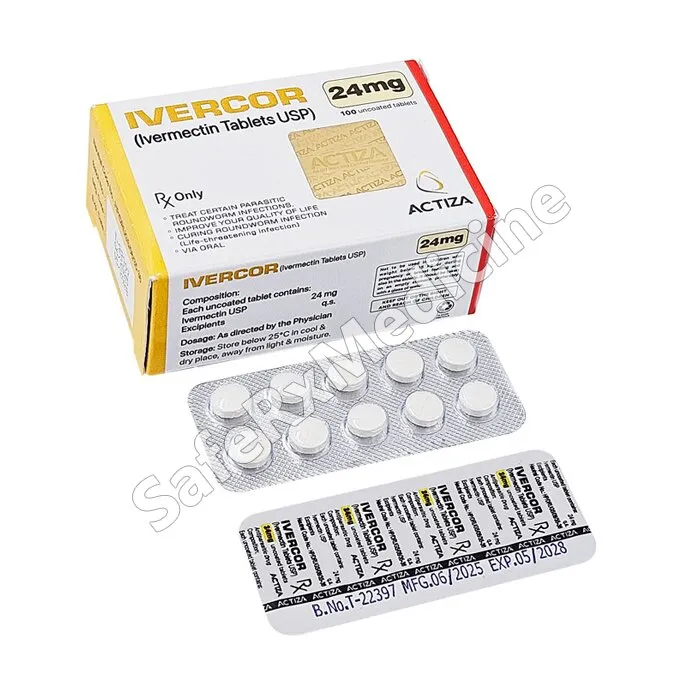
Ivercor 24 Mg (Ivermectine)
Just $0.82 /Piece -

Ivercor 3 Mg (Ivermectine)
Just $0.53 /Piece -

Ivercor 6 Mg (Ivermectine)
Just $0.58 /Piece
Dosing depends on weight, condition, and form. For onchocerciasis in adults 65-85 kg, a single 150 mcg/kg dose (about 4 tablets of 3 mg each). Strongyloidiasis follows similar weight-based dosing, often 200 mcg/kg as a single dose or repeated.
Tablets are taken on an empty stomach with water; topical creams apply directly. Always follow prescribed amounts—overdosing risks toxicity.
| Condition | Typical Adult Dose | Frequency |
|---|---|---|
| Strongyloidiasis | 200 mcg/kg | Single dose, repeat if needed |
| Onchocerciasis | 150 mcg/kg | Every 3-12 months |
| Head Lice (topical) | As directed | One application |
Safe Usage Practices
Use ivermectin only under medical supervision for confirmed parasitic infections. Obtain via prescription; avoid self-medicating, especially with veterinary products.
Pregnant or breastfeeding individuals should consult doctors, as safety data varies. It’s contraindicated in young children under 15 kg and those with compromised blood-brain barriers (e.g., meningitis).
Monitor for worsening symptoms post-dose (Mazzotti reaction in onchocerciasis), managed with antihistamines or steroids.
Common Side Effects
Mild effects include dizziness, nausea, diarrhea, fatigue, and itching. These often stem from dying parasites.
Serious reactions: severe skin rash, swelling, vision changes, or neurological symptoms like confusion—seek immediate care. Overdose causes vomiting, tremors, coma.
| Mild Side Effects | Serious Side Effects |
|---|---|
| – Itching – Diarrhea – Dizziness | – Swelling (face/lips) – Seizures – Vision loss |
Contraindications and Precautions
Avoid in hypersensitivity to ivermectin or with Loa loa co-infection (risks encephalopathy). Use caution with liver disease; dose adjustments may apply.
Drug interactions: warfarin (increased bleeding risk), certain seizure meds. Alcohol may amplify dizziness.
Not for viral infections like COVID-19—lacks approval and evidence.
Veterinary vs. Human Ivermectin
Human versions are purified; veterinary pastes/liquids risk overdose due to concentration differences. Never interchange—veterinary products caused poisonings during off-label use.
Global Impact and Access
Since 1987, ivermectin treated billions via mass campaigns, slashing river blindness rates. Programs like Merck’s donation deliver it free in endemic areas.
In India (relevant to Gujarat), it’s used for filariasis and scabies control.
When to See a Doctor
Consult for diagnosed parasites via stool/skin tests. Symptoms like persistent rash, unexplained weight loss, or travel-related diarrhea warrant checks.
Do not use for prevention without evidence.
Myths and Misinformation
Ivermectin gained notoriety for unproven COVID-19 claims; major health bodies (FDA, WHO) reject this due to insufficient trials. Stick to evidence-based uses.
Storage and Handling
Store tablets below 30°C, away from moisture/light. Dispose unused meds properly.